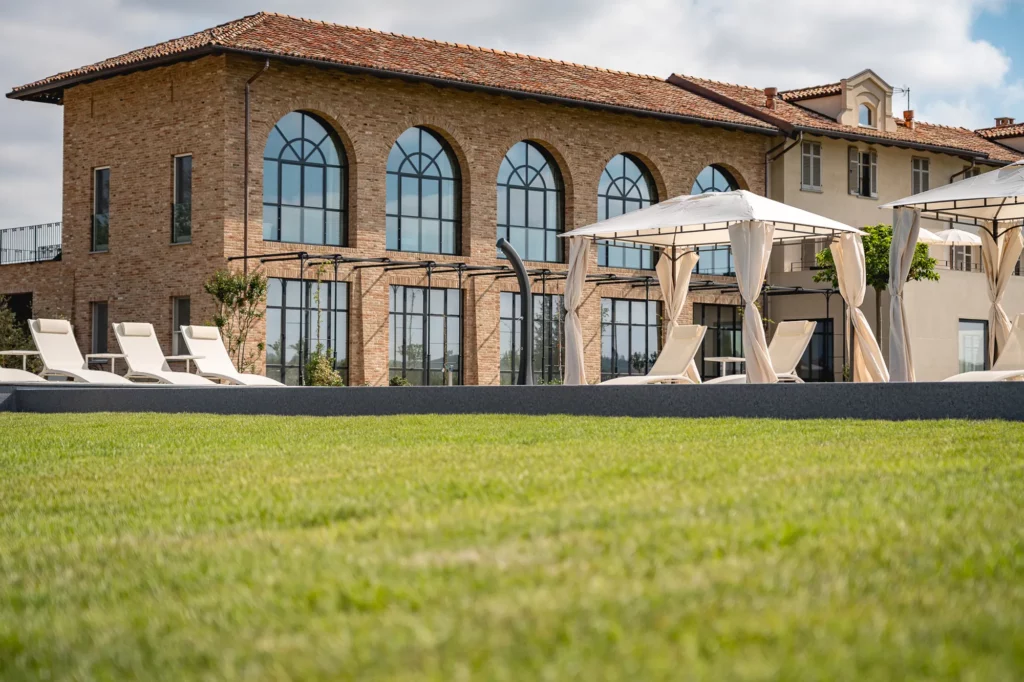
Monvì Wine Relais
Strada San Martino 3, 14055 Costigliole d’Asti
005050-AGR-00011
The Man Who Changed the Destiny of Chardonnay in Piedmont
The man who changed the destiny of Chardonnay in Piedmont
Today we are telling you a story of the kind that doesn’t stay in books, but is found directly in the glass.
Have you ever heard of Filippo Antonio Asinari? Marquis of San Marzano, a legendary figure who spans the history of Piedmont to the present day, and who we rediscover every time we uncork a Chardonnay grown on these hills.
When we talk about this grape variety in our tastings, we don’t just do it to describe its aromas or structure, but because at its origin lies a specific choice, almost revolutionary for the time: that of bringing a French grape to Piedmont and imagining it could become something new.
And it is precisely here that the history intertwines with the territory, with our estate, and with the experience we offer today.
Who was Filippo Antonio Asinari
Filippo Antonio Asinari di San Marzano was born in 1767 into one of the most influential noble families of the Asti area. His life, however, was not that of a simple landowner: he was a soldier, a diplomat, and a statesman.
He worked in the service of the House of Savoy, but also under Napoleon, living through a complex historical period, characterized by profound political and cultural changes. This led him to travel extensively, especially in France, which at that time was a point of reference for the agricultural and winemaking world as well.
And it was precisely during one of these stays that something happened destined to leave a mark.
The journey to France and the intuition
During his stay in Burgundy, Asinari came into contact with one of the most prestigious wine regions in the world. Here he discovered Chardonnay in its purest expression, among vineyards like Montrachet, where this grape variety reaches extraordinary levels.
He didn’t just appreciate it: he decided to bring it with him.
Around the early nineteenth century, he returned to Piedmont with some Chardonnay vine cuttings and planted them on his properties in Costigliole d’Asti. A gesture that today might seem normal, but which at the time was anything but a given.
It wasn’t just about importing a foreign variety. It was a new way of thinking about viticulture: observing, experimenting, adapting.

The first Chardonnay vineyards in Piedmont
According to tradition and historical sources, it is precisely in Asinari’s vineyards that Chardonnay began to take root in our territory. A fundamental step, because from then on this grape variety would find more and more space, until it became a consolidated presence in Piedmont.
In our reality, this story is not just a distant reference: it is part of the identity of our relais. In fact, it is said that precisely here some of the first Chardonnay vine cuttings brought by the Marquis were planted.
This is why we chose to pay homage to this figure through our Chardonnay: not as a stylistic exercise, but as continuity.
Not just grape varieties: an innovative approach
Reducing Asinari to “the one who brought Chardonnay” would be limiting. His contribution is much broader.
He was one of the first to introduce more advanced cultivation and winemaking techniques for the time, influenced precisely by his French experiences. An approach that today we would define as experimental, but which then represented true innovation.
The idea of observing other territories, studying them, and then adapting the practices to one’s own context is something that still forms the basis of the work in the vineyard and the cellar today.
In this sense, Asinari is not just a historical figure: he is a precursor of a modern way of making wine.
Chardonnay today: between territory and technique
Today Chardonnay is an international grape variety, present all over the world. But every territory interprets it differently.
In Piedmont, it finds its own precise identity: less opulent than some French versions, but fresher, more balanced, often playing on finesse.
In our case, the winemaking follows a path designed to enhance both the grape variety and the territory:
- initial fermentation in steel, to maintain freshness and varietal aromas
- transfer to barriques halfway through fermentation
- aging for about 10 months, with a combination of new and used wood
- weekly bâtonnage, to increase structure and complexity
This work translates into a wine that unites multiple levels: the fruity part of the Chardonnay, the softer and creamier notes given by the wood, and a minerality that tells the story of the territory.
Tasting a history, not just a wine
When Chardonnay arrives in the glass, all of this is not immediately visible. You perceive aromas, sensations, balance.
But behind it, there is a journey two centuries long.
For this reason, during our tastings, we choose to tell this story as well. Not as a lesson, but as a way to give depth to the experience.
Understanding why a Chardonnay exists on these hills today changes the way you taste it. It is no longer just a white wine: it becomes the result of an intuition, of a journey, of a choice made a long time ago.
From the past to today’s experience
Today, among the hills surrounding the Monvì relais, this legacy continues to live on. Not in a nostalgic way, but in a concrete one.
Every bottle is a point of contact between past and present: between those who brought a new idea here and those who continue to work on it, harvest after harvest.
And this is exactly what we try to convey: an experience that doesn’t stop at tasting, but that brings together territory, history, and wine in a natural way.
Image copyright @google
Carpe diem
Opportunities to be together
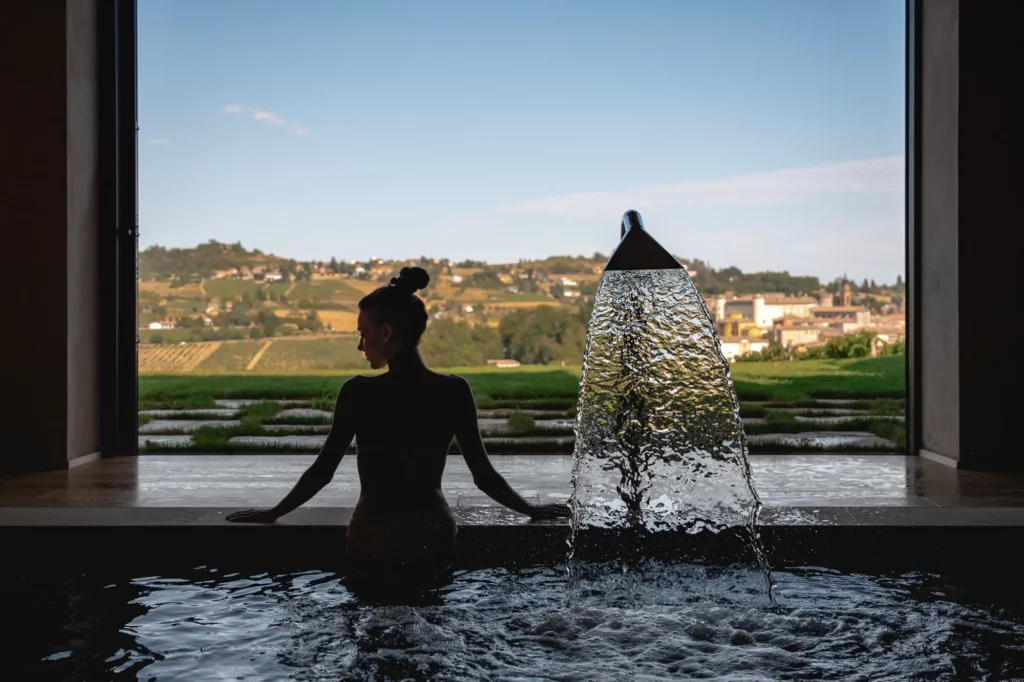
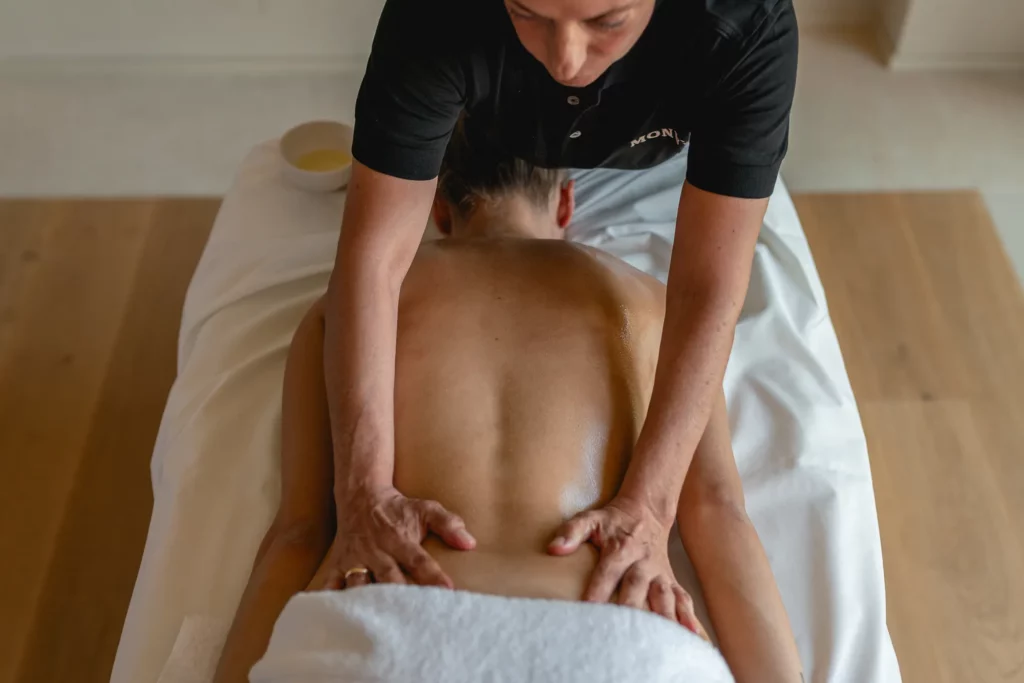
Sharing special moments with loved ones is an art, and we are here to make every moment unforgettable. In the heart of Monferrato, breathtaking scenery and a special welcome await you, convivial moments around tables of delicious food and wine. From fine wine tastings to relaxing moments in our spa, every activity is designed to create precious memories. Here, the taste of shared emotions is a viaticum towards experiences that will remain in the heart, always ready to become the ideal setting for new occasions of joy together.